Contact Us
|
WeChat
WeChat ID:842122368Scan to Connect
WeChat ID:842122368Scan to Connect

Comprehensive Guide to Drone Countermeasure Technologies – Detection, Jamming, Spoofing & More | ANOEKO
With the rapid adoption of consumer and commercial drones, unauthorized drone flights (black fly), privacy breaches, and security threats have become critical concerns. Airports, nuclear power plants, stadiums, government buildings, and critical infrastructure all face growing risks from urban low‑altitude intrusions. How to effectively implement drone countermeasures? This article provides an in‑depth analysis of the most effective drone countermeasure technologies, their working principles, and real‑world deployment scenarios. We also highlight how ANOEKO delivers innovative, integrated solutions—combining radar detection, RF monitoring, GPS spoofing, laser systems, and more—to help security professionals build a robust low‑altitude defense framework.
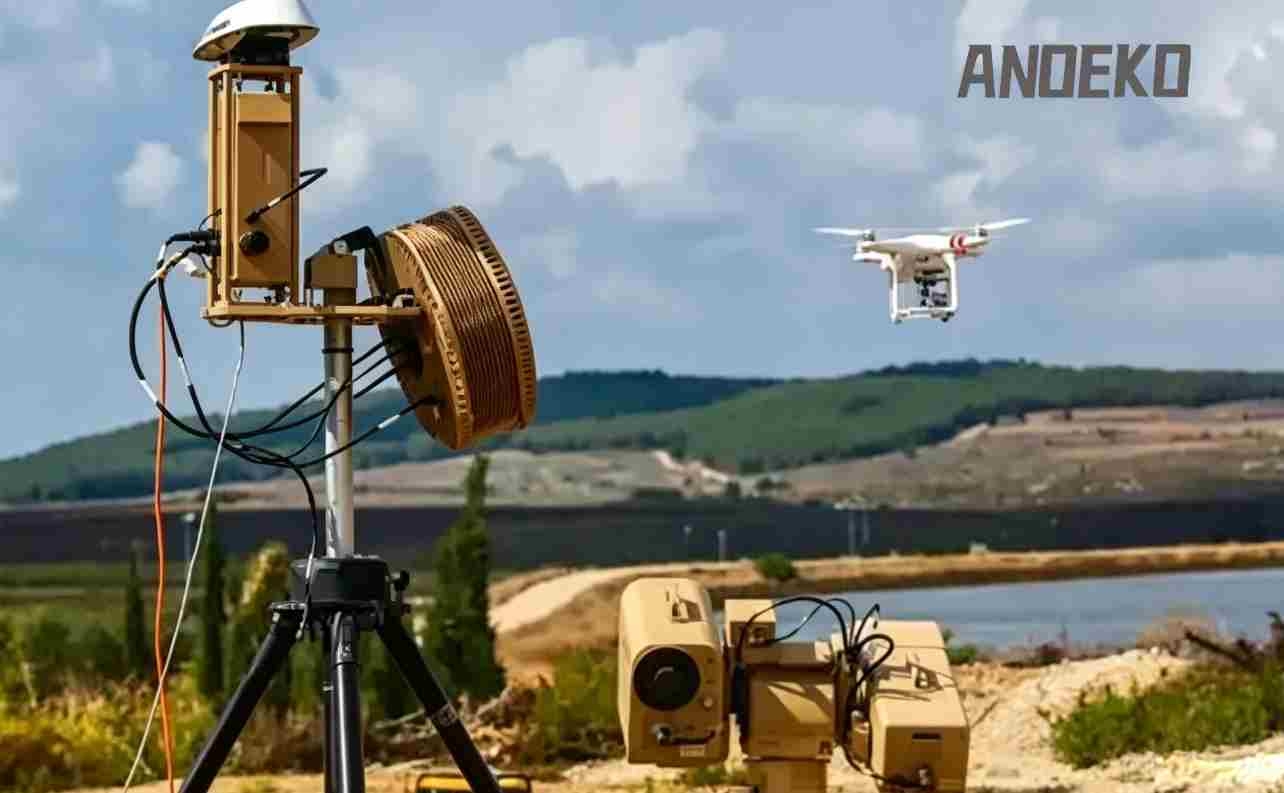
1. Drone Detection & Identification – From Discovery to Lock‑On
Reliable detection is the first and most critical step for successful counter‑UAS operations. Today’s drone detection technologies fall into four main categories.
1.1 Radar Detection – Long‑Range, All‑Weather Sensing
Radar emits electromagnetic waves and analyzes echoes to determine a drone’s position, speed, and trajectory. ANOEKO integrates compact low‑altitude gap‑filler radar with advanced clutter rejection. It can detect micro‑drones at distances up to 5 km, making it ideal for airport exclusion zones and border surveillance. Doppler processing effectively filters out bird returns, drastically reducing false alarms.
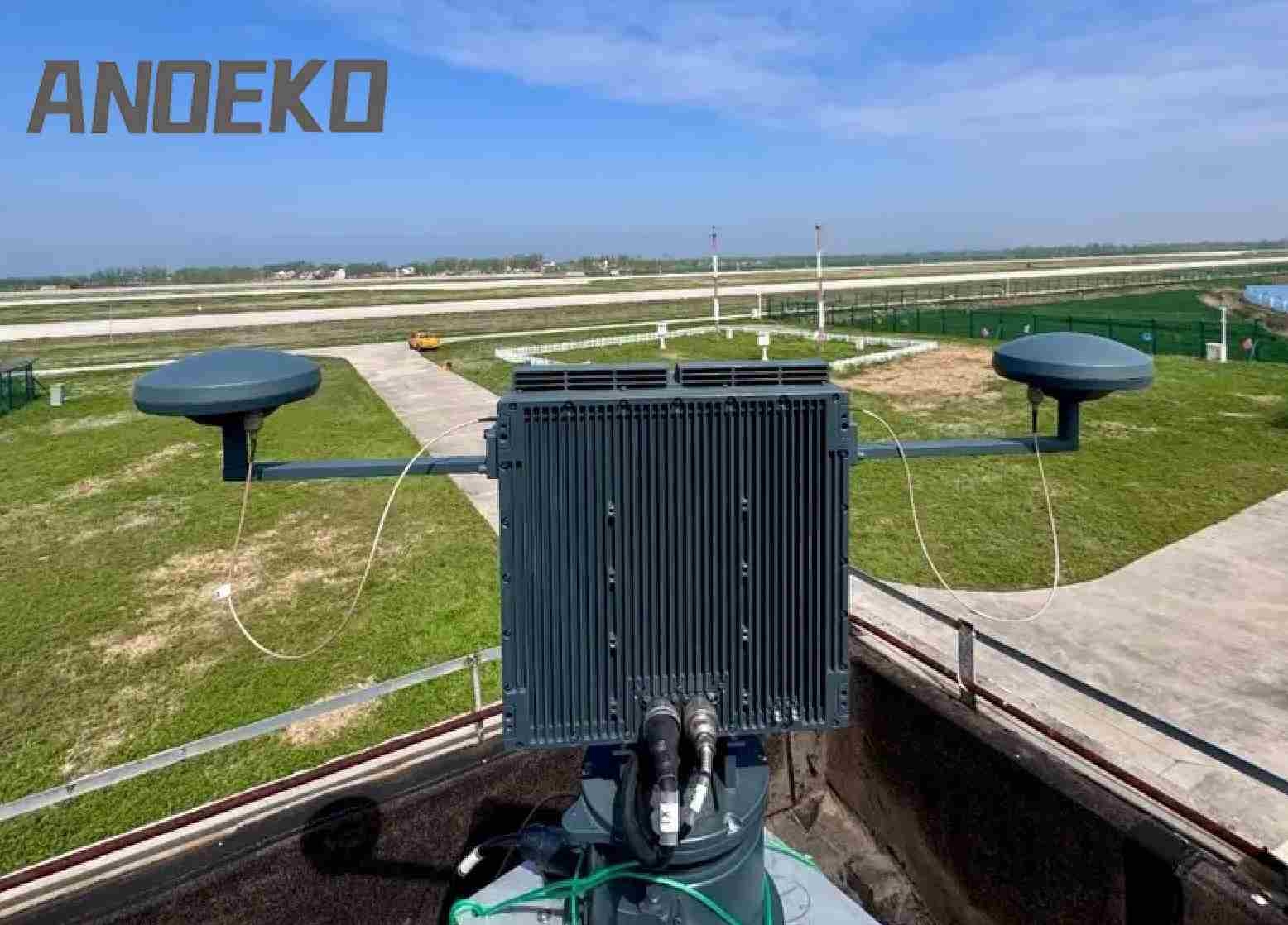
1.2 Radio Frequency (RF) Monitoring – Passive Surveillance
RF sensors passively capture the spectral signatures of drone flight control and video downlinks. Single‑station direction finding provides bearing, while multi‑station TDOA (Time Difference of Arrival) pinpoints the target’s exact latitude and longitude. Because RF monitoring emits no radiation, it offers excellent stealth for urban downtown areas and government complexes. ANOEKO’s RF detectors support hopping/spread‑spectrum protocol decoding, identifying DJI, Autel, and even DIY drones.
1.3 Electro‑Optical (EO) & Infrared (IR) Tracking – Visual Confirmation
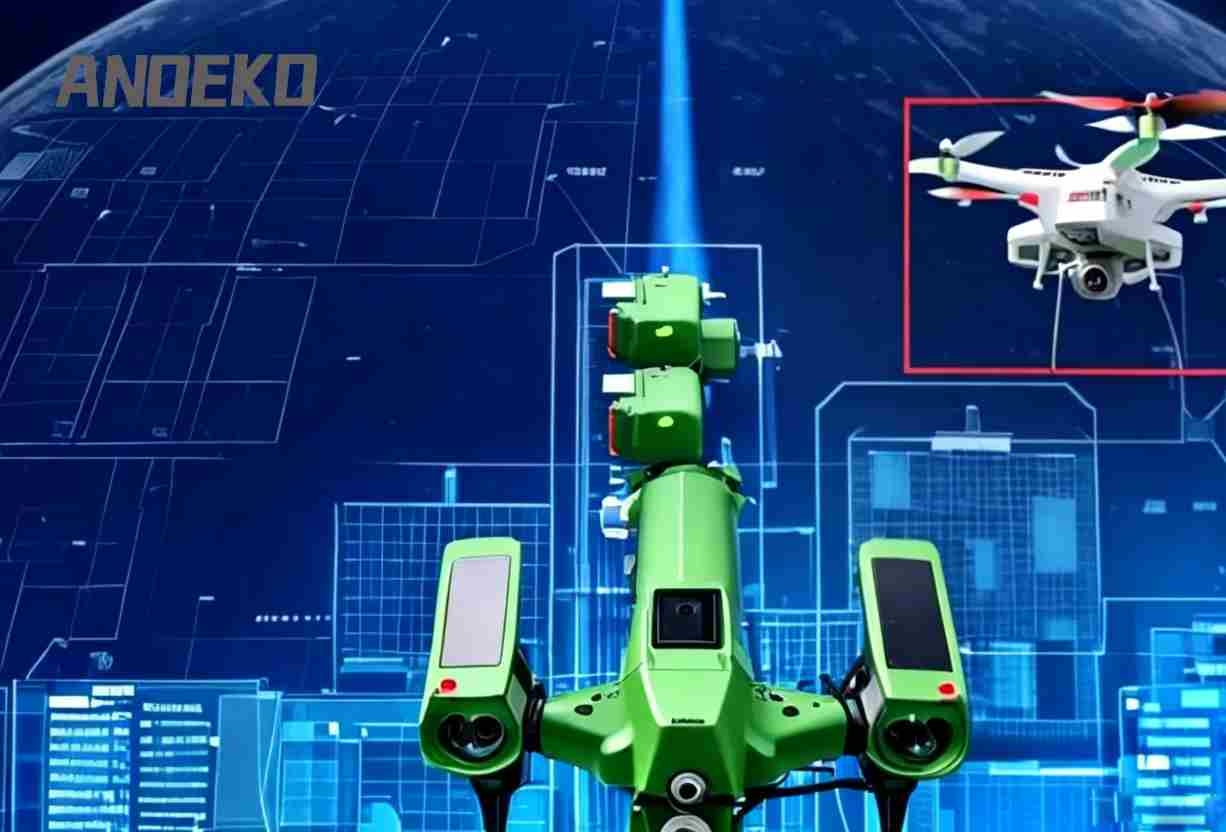
High‑definition visible cameras combined with thermal imagers, driven by AI‑based vision algorithms, automatically lock onto intruding drones. The system uses visible light during daytime and switches to IR at night or in low visibility conditions. Integrated laser rangefinders provide accurate pointing for jamming systems. ANOEKO’s EO/IR tracking stations feature auto‑zoom and re‑acquisition, widely deployed for large‑scale event security and petrochemical plant patrols.
1.4 Acoustic Monitoring – Covert & Passive
Acoustic sensors capture propeller noise and match it against a trained sound signature database. This completely passive method is perfect for silent monitoring applications such as prison perimeters or VIP residences. Although environmental noise can be challenging, array microphones plus deep‑learning noise suppression have significantly improved accuracy.
2. Countermeasure Methods – From Soft‑Kill to Hard‑Kill
Once a rogue drone is detected and identified, the appropriate countermeasure is selected based on the operational environment. ANOEKO classifies counter‑UAS methods into four categories.
2.1 Disruption & Blocking – Non‑Destructive Return‑to‑Home or Landing
● Electromagnetic Jamming – Transmits high‑power RF signals to block the 2.4 GHz / 5.8 GHz link between the drone and its controller, cutting command, telemetry, and video streams. Most drones will automatically return‑to‑home or descend. ANOEKO’s portable jamming gun provides directional suppression up to 1.5 km, ideal for temporary VIP protection.
● GPS Spoofing – Broadcasts fake navigation signals (GPS, BeiDou, GLONASS) to override genuine satellite data. The spoofed drone can be guided into a pre‑defined “no‑fly zone” or directed to a safe capture point. ANOEKO’s navigation spoofing devices include geofencing white‑lists to avoid interfering with legitimate navigation equipment.
● Acoustic Resonance Jamming– Emits high‑intensity sound at the resonant frequency of MEMS gyroscopes, causing attitude sensor failure. This is still an emerging technology effective on specific small drone models.
2.2 Spoofing & Full Control – Taking Over the Drone
By decoding the drone’s communication protocol, a stronger forged control frame can completely hijack the aircraft. The operator then safely lands the rogue drone at a designated location. ANOEKO’s protocol analysis platform supports real‑time tracking of common frequency‑hopping sequences. This method is used for high‑value foreign events and nuclear facility protection to capture suspicious drones intact.
2.3 Interception & Capture – Physical Neutralization
● Net guns– Launch a nylon net to entangle rotors.
● Interceptor drones – Large octocopters carrying nets or trailing ropes to capture smaller UAVs.
● Trained raptors – Birds of prey (e.g., falcons) for natural capture in wildlife reserves or areas where electronic interference is restricted.
ANOEKO’s vehicle‑mounted net capture system supports multiple launches per reload, commonly used at concerts and marathon events where crowds are present.
2.4 Direct Destruction – High‑Energy Lethal Options
● Laser weapons – A high‑energy beam burns the drone’s shell or critical electronics, causing it to crash within seconds. Benefits include lightspeed engagement and no fragmentation. Suitable for rural areas and military base perimeters.
● Microwave weapons – High‑power microwave pulses fry internal circuits, effective against drone swarms.
● Missiles / projectiles – Reserved for large armed drones or battlefield use; rarely employed in urban counter‑terrorism.
> Note: Direct destruction methods are generally avoided in urban environments due to falling debris risks. ANOEKO’s hard‑kill solutions include safety interlocks and impact point prediction, strictly limiting use to authorized airspace.
3. Integrated Application – ANOEKO Unified Counter‑UAS System
No single technology can address the complexity of modern drone threats. ANOEKO delivers a closed‑loop “detect‑identify‑decide‑neutralize” architecture:
1. Sensor Fusion – Radar detects long‑range targets; RF sensors passively confirm; EO/IR automatically slews for visual ID and AI‑based friend/foe differentiation.
2. Strategy Optimization – The system recommends jamming, spoofing, or net capture based on the scenario. For example, airport perimeters favor GPS spoofing to divert drones to a safe zone inside the fence; prison airspace may use direct electromagnetic jamming for forced landing.
3. Action & Recording – All actions are logged, triggering alarms and integrating with access control systems for a complete incident record.
ANOEKO integrated systems have been successfully deployed at a 2024 international summit, a major East‑China airport, and CNOOC offshore drilling platforms, achieving over 96% neutralization success against unauthorized drones.
4. Future Trends & ANOEKO’s Innovation Roadmap
As drones become more autonomous and swarm technologies mature, drone countermeasure technologies are evolving rapidly:
● Cognitive radio & AI jamming – Automatically learns new frequency‑hopping patterns and generates optimal jamming strategies.
● Distributed cooperative sensing – Multi‑sensor networks with 5G low‑latency backhaul for seamless wide‑area tracking.
● Anti‑swarm systems – Combining microwave weapons, electronic warfare arrays, and net‑based interceptors to defeat dozens of drones simultaneously.
● Ethics and regulation – Ensuring countermeasures do not harm uninvolved systems or people. ANOEKO actively participates in low‑altitude security standards, with all products compliant with national radio regulations.
5. How to Choose the Right Counter‑UAS Method for Your Scenario
Deployment Scenario | Recommended Technology Stack | Use Case Description |
Airport clear zone / flight path | Radar + RF monitoring + GPS spoofing | airport drone countermeasure system, navigation spoofing for airports |
Government buildings / prisons | RF monitoring + EO/IR + electromagnetic jamming | silent drone detection, passive counter‑UAS equipment |
Large stadiums / concerts | Portable jamming gun + net capture | crowd‑dense area drone interception, temporary low‑altitude security |
Industrial plants / refineries | IR thermal + acoustic jamming + microwave weapons | explosion‑proof drone mitigation, industrial drone countermeasures |
Border / military restricted zones | Radar + laser weapons + large capture drones | long‑endurance anti‑drone, hard‑kill C‑UAS systems |
ANOEKO offers modular counter‑UAS products. Users can mix and match based on budget and operational needs, and we support custom algorithm development for specific scenarios.
Conclusion
Drone countermeasure technology is moving toward multi‑method fusion, intelligent decision‑making, and a blend of soft‑ and hard‑kill capabilities. Whether radar, RF monitoring, EO/IR, jamming, spoofing, net capture, or lasers, each method has its optimal use case. ANOEKO is committed to delivering high‑reliability, compliant, and scalable drone countermeasure solutions—from single devices to large fixed‑site integrated systems—protecting low‑altitude security worldwide.
If you are seeking reliable drone countermeasure technology solutions for urban low‑altitude security, critical infrastructure protection, or event security, visit the ANOEKO website for more product details or to schedule a live field test with our engineering team.
Consultation Hotline
+86 18948793112
Email:lisen1205@foxmail.com
Mobile:+86 18948793112
Phone:+86 18948793112
Address:Changchun North Road, Gongming Street, Guangming District, Shenzhen, China
Copyright © 2002-2026 Anoeko Technology Co., Ltd. All Rights Reserved. | Anti-Drone & Low-Altitude Defense Experts ICP:ICP