Contact Us
|
WeChat
WeChat ID:842122368Scan to Connect
WeChat ID:842122368Scan to Connect

Introduction: The Growing Drone Threat to Gulf Energy Infrastructure
The Middle East's oil and gas sector has become a primary target for hostile drone operations. From the 2019 Abqaiq–Khurais attack that temporarily knocked out 5% of global oil supply to the recent Houthi drone strikes on Saudi Aramco refineries in Jazan, the message is clear: energy infrastructure is vulnerable, and conventional air defense alone is not enough.
The threat landscape has evolved dramatically. Low-cost commercial drones can now be weaponized for surveillance, precision strikes, or swarm attacks against refineries, pipelines, and storage terminals. Meanwhile, the conflict in Ukraine and escalating tensions across the Gulf have demonstrated that "low, slow, small" (LSS) drones can bypass traditional radar systems, creating critical gaps in airspace security that hostile actors are eager to exploit.
The response from Gulf regulators has been swift and decisive.
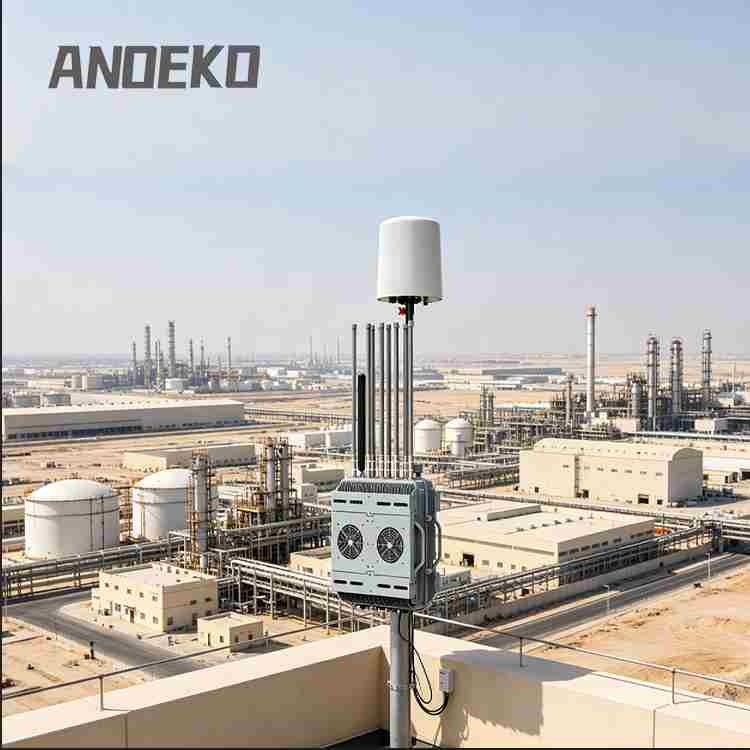
Both Saudi Arabia and the United Arab Emirates have now mandated counter-UAS defenses for critical energy infrastructure under new critical infrastructure protection laws.
Saudi Arabia has become a focal point for operational experimentation through the Red Sands program, a US-Saudi counter-unmanned systems initiative that in 2025 involved over 300 personnel and fielded 20 counter-UAS systems at the Shamal 2 range. The Kingdom is not content with simply buying technology—it wants to own, sustain, and eventually export this capability.
The UAE, meanwhile, has faced staggering drone threats: its air defense systems have intercepted over 300 ballistic missiles and 1,600 drones, a number that underscores the immense security pressure on the region. Both nations are now pushing for compliant, deployable C-UAS solutions that can protect petrochemical facilities without disrupting operations or violating international spectrum regulations.
Enter ANOEKO.
ANOEKO's counter-UAS systems for the oil and gas sector are built around two core technologies that work in concert: TDOA passive detection and navigation spoofing.
Traditional active radar emits signals that can be detected and targeted. Passive RF detection operates differently—it listens without transmitting.
The system's TDOA (Time Difference of Arrival) multi-sensor positioning technology uses three or more networked sensors to triangulate the exact RF signals emitted by drones and their controllers. This approach provides:
Precise geolocation of both the drone and the pilot in real time
Silent, covert operation with zero electromagnetic emissions
Full spectrum coverage from 100MHz to 6GHz, capturing command-and-control links, telemetry, and video transmissions
Detection ranges of 5–10 kilometers—critical for protecting large perimeters like refineries and power plants
Every drone model has a unique digital "fingerprint" created by its communication protocol and signal patterns. ANOEKO's signature library can instantly identify everything from standard DJI aircraft to non-standard FPV and DIY drones, while smart whitelist and blacklist protocols distinguish between authorized fleet operations and genuine threats.
For oil and gas facilities, safety is paramount. Navigation spoofing offers the ideal countermeasure because it creates a virtual "no-fly zone" by emitting low-power counterfeit satellite signals that cause drones to either be repelled or forced to land.
Unlike radio jamming (which can disrupt site communications and is often illegal for civilian use), navigation spoofing:
Operates at low power (≤10mW emission)—fully compliant with Gulf security regulations
Requires no line-of-sight and covers 360°
Can run 24/7 unattended
Produces no debris—critical in hazardous environments like refineries
Complies with drone regulation frameworks that prohibit destructive countermeasures in civilian areas
The system provides 5–10 kilometers of spoofing range, ensuring threats are neutralized at a safe distance before they can reach high-value assets.
Petrochemical plants present unique challenges for drone defense:
Flammable and explosive environments mean kinetic interceptors (nets, projectiles) and high-energy lasers are unacceptable
Electromagnetic interference from jamming can disrupt critical site communications and violate regulations
Large perimeters require detection ranges exceeding 3 kilometers
Continuous 24/7 operation means manual monitoring is impractical
Navigation spoofing addresses all these constraints: it's safe, low-power, fully automated, and creates no physical or electromagnetic hazards.
ANOEKO's systems create a complete "detect-identify-locate-neutralize" chain:
Passive RF detection identifies the drone's presence and extracts its unique serial number
TDOA multi-sensor positioning pinpoints both the drone and pilot on a live map
Signature library matching instantly classifies the threat
Automated countermeasure initiation triggers navigation spoofing without human delay
Real-time tracking and handoff pushes live tracking data to response teams
This automation is essential when defending against the high-frequency "burn rates" seen in modern saturation attacks. The system can track swarms of up to 10 drones simultaneously
The regulatory push across the Gulf is creating significant demand for compliant C-UAS solutions. Key trends include:
Integration of UTM (UAV Traffic Management) with C-UAS capabilities
Emphasis on domestic capability building—Gulf nations want to own and sustain these systems
Large-scale live-fire exercises testing integrated defenses in realistic conditions
The global anti-drone market for oil and gas is projected to see sustained double-digit growth, driven by both regulatory mandates and the escalating threat environment.
The drone threat to Middle East energy infrastructure is not hypothetical—it's happening now. Saudi Arabia and the UAE have responded with clear regulatory mandates requiring counter-UAS defenses for critical energy assets.
ANOEKO's TDOA passive detection and navigation spoofing systems deliver the precise combination Gulf operators need: silent detection, precise localization, safe neutralization, and full regulatory compliance.
With ≤10mW emissions, 24/7 unattended operation, and proven performance across oil refineries, pipelines, and petrochemical facilities, ANOEKO is helping secure the region's energy future—one protected asset at a time.
To learn more about ANOEKO's C-UAS solutions for the oil and gas sector, contact our team for a consultation tailored to your facility's specific security requirements.
Consultation Hotline
+86 18948793112
Email:lisen1205@foxmail.com
Mobile:+86 18948793112
WhatsApp:+86 18948793112
Address:Changchun North Road, Gongming Street, Guangming District, Shenzhen, China
Copyright © Copyright 2013 Anoeko Technology Co., Ltd. All Rights Reserved. | Anti-Drone & Low-Altitude Defense Experts ICP:ICP