Contact Us
|
WeChat
WeChat ID:842122368Scan to Connect
WeChat ID:842122368Scan to Connect

Drones have evolved into mainstream operational tools driving the growth of the low-altitude economy. Meanwhile, mature counter-UAS solutions are becoming essential infrastructure to sustain low-altitude airspace safety. As the global fleet of low-altitude aerial vehicles keeps expanding, security risks continue to escalate: unauthorized drone flights, airport disruptions, illegal surveillance and intrusion into restricted zones pose persistent threats to critical facilities and public safety.
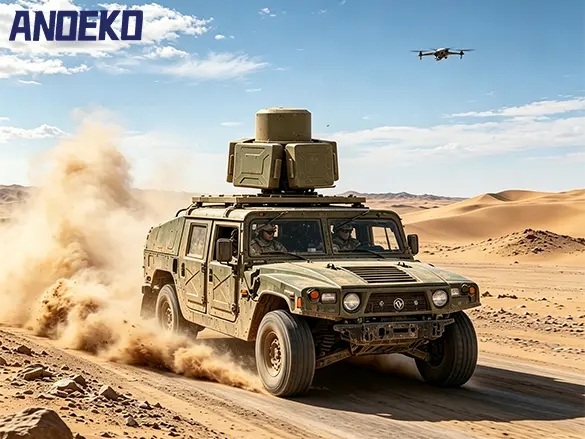
Regulatory and industrial consensus has become clear: vigorous development of the low-altitude economy must go hand in hand with robust low-altitude security governance. Counter-UAS technology is no longer treated as standalone hardware equipment; instead, it serves as a core component of a comprehensive low-altitude airspace management ecosystem.
Governments worldwide have rolled out updated regulations governing unmanned aerial vehicles, establishing frameworks for drone registration, flight authorization, airspace supervision and low-altitude operation support. National aviation development roadmaps and regional low-altitude economic policies consistently highlight key priorities:
Construct low-altitude flight service support systems
Improve operational supervision capacity for low-altitude airspace
Strengthen low-altitude protection of high-priority zones
Accelerate deployment of drone detection and mitigation infrastructure
Critical infrastructure operators including airports, power substations, petrochemical plants, railways, ports, water conservancy hubs, government compounds and large-scale event venues are raising standards for low-altitude threat prevention. The industry trend is shifting from scattered single-device deployment toward systematic, intelligent and networked counter-UAS architectures.
Traditional countermeasure workflows only detect and neutralize individual drones. Modern solutions adopt a complete closed-loop framework covering Detection – Identification – Positioning – Management – Mitigation.
Detection: Round-the-clock sensing of low-altitude aerial targets
Identification: Precise verification of drone identity and model features
Positioning: Accurate geolocation of drones and remote operators
Management: Centralized scheduling and cross-unit linkage via command platforms
Mitigation: Intelligent, graded and safe intervention against unauthorized UAVs
This architecture enables full lifecycle supervision of low-altitude drone activities rather than passive emergency interception.
Varied operational environments demand tailored hardware solutions. A complete product matrix combining fixed stations, mobile vehicle platforms, portable units and unified management software meets demands for permanent guarding, mobile patrols, temporary security missions and emergency response.
Fixed counter-UAS platforms are designed for long-term, uninterrupted protection of key restricted zones. The all-in-one unit integrates detection, classification, positioning and mitigation modules to deliver unattended 24/7 operation.
Typical Deployment Scenarios:
Power plants, transformer substations, petrochemical facilities, water conservancy hubs, seaports, airports, government premises and military sites.
The system automatically alerts operators and initiates mitigation protocols once unauthorized drones breach protected airspace.
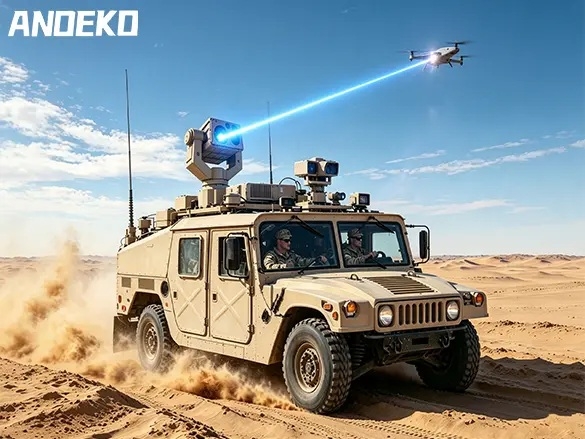
Fixed equipment delivers point protection, while vehicle-integrated counter-UAS systems provide linear and regional coverage. The platform consolidates sensors, positioning hardware, countermeasure transmitters and communication modules onboard vehicles to achieve rapid mobile deployment.
Core Advantages
Rapid Setup: No permanent civil construction required; the whole system can be activated within minutes after arriving at mission sites.
Mobile Patrol: Flexible cruising along transmission corridors, pipelines, borderlines and highway networks to realize dynamic airspace defense.
Emergency Response: Fast dispatch to address sudden drone intrusions, major event security incidents and emergent safety hazards, shortening response latency.
Network Coordination: Multiple counter-UAS vehicles can operate in clusters and interconnect with fixed monitoring stations to expand the coverage of integrated low-altitude sensing networks.
Main Application Scenarios:
Police patrol operations, emergency rescue missions, wildfire prevention, power transmission line security, oil & gas pipeline monitoring, highway & railway inspection, border surveillance, port security, international tournaments, concerts, exhibitions and temporary high-level security assignments.
Vehicle-mounted counter-UAS platforms function as critical supplements to fixed-site equipment and represent a major development direction for modern low-altitude security construction.
Lightweight portable equipment targets individual operators and temporary security tasks, featuring easy transportation and instant deployment. Widely used for ad-hoc perimeter security, emergency support and law enforcement on-site drone threat disposal.
● GIS airspace visualization
● Real-time low-altitude situational awareness
● Allowed/blocked drone whitelist management
● Instant threat alert notification
● Flight trajectory recording and playback
● Historical incident data archiving
● Multi-device networking and multi-level command linkage
● Threat statistics and data analysis
Market competitiveness relies not merely on hardware specifications but proprietary underlying technology stacks.
CRPC Cognitive Radio Protocol Analysis: AI algorithms continuously learn drone communication protocols to identify drone brands, models and electronic signatures, supporting compatibility with newly emerging UAV types.
AI Electronic Fingerprint Recognition: Captures unique radio frequency characteristics of individual drones to distinguish authorized flights from illegal intrusions and realize differentiated supervision.
TDOA High-Precision Positioning: Leverages time-difference-of-arrival technology to locate both drones and remote pilots, reconstructing complete flight trajectories for evidence retention.
Intelligent Navigation Spoofing: Compared with broadband brute-force jamming, navigation deception delivers targeted, low-interference mitigation. It guides rogue drones to hover, return home or perform safe landing with minimal disturbance to surrounding wireless communication environments, ideal for long-term deployment in sensitive core zones.
AI Intelligent Analysis: Combined with large-model low-altitude situational computing, the system automatically evaluates threat levels, generates early warnings and triggers coordinated mitigation actions, pushing low-altitude security into the intelligent era.
Future low-altitude security frameworks depend on coordinated multi-type equipment rather than isolated devices. The layered defense structure consists of:
✅ Fixed counter-UAS stations: Permanent round-the-clock protection for vital static targets
✅ Vehicle-mounted counter-UAS platforms: Rapid deployment, mobile patrol and emergency response
✅ Portable countermeasure hardware: Flexible on-site disposal for short-term tasks
✅ Unified management platform: Integrates detection, tracking, positioning and command scheduling to support cross-equipment coordination
Fixed systems guard key points, vehicle platforms patrol linear corridors, and the central platform manages regional airspace. Together, they form an interconnected intelligent low-altitude safety network covering critical installations, transportation routes, urban districts and mass public events.
Low-altitude economy expansion must be matched with forward-thinking low-altitude security governance. Drones serve as productive enablers for industrial innovation, while effective counter-UAS infrastructure safeguards sustainable and orderly industry development.
Counter-UAS solutions are evolving from discrete hardware to intelligent, mobile, cloud-networked integrated systems. Deploying fixed monitoring stations, mobile vehicle-mounted units, portable gear and unified command platforms builds end-to-end defense capacity covering detection through controlled mitigation. Such architectures will become standard infrastructure for public security, energy, transportation and emergency management authorities, supporting high-quality, secure growth of the global low-altitude economy.
Consultation Hotline
+86 18948793112
Email:lisen1205@foxmail.com
Mobile:+86 18948793112
WhatsApp:+86 18948793112
Address:Changchun North Road, Gongming Street, Guangming District, Shenzhen, China
Copyright © Copyright 2013 Anoeko Technology Co., Ltd. All Rights Reserved. | Anti-Drone & Low-Altitude Defense Experts ICP:ICP