Contact Us
|
WeChat
WeChat ID:842122368Scan to Connect
WeChat ID:842122368Scan to Connect

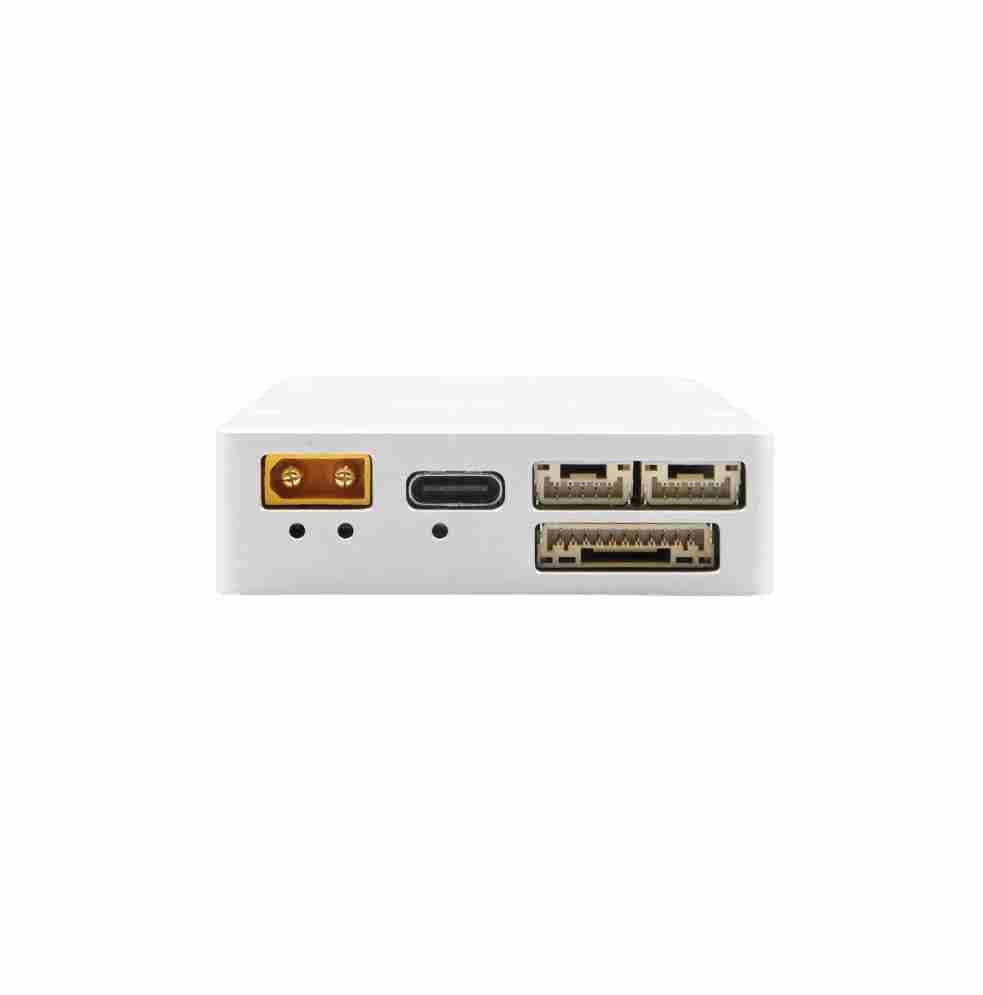
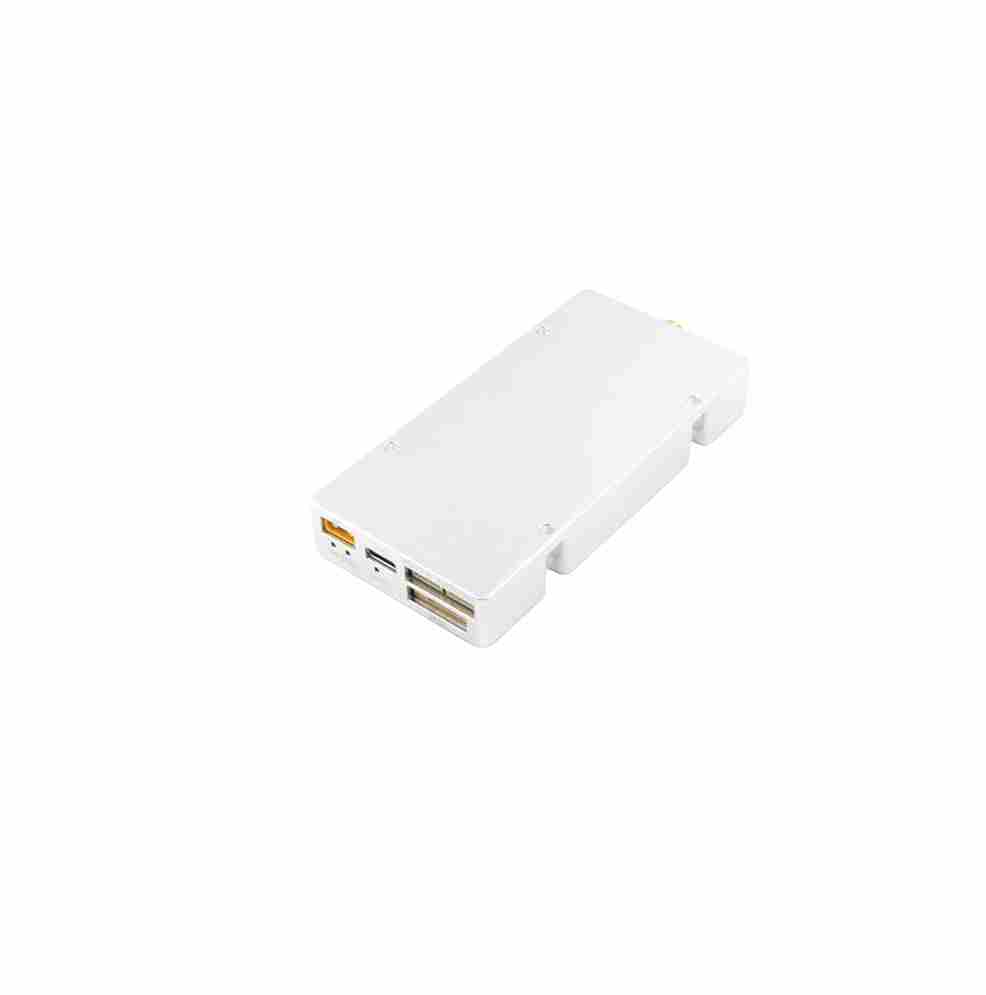
Modern RF development requires more than a stable frequency source. Engineers and system developers often need flexible frequency coverage, configurable signal bandwidth, programmable waveforms, precise output adjustment, and reliable communication interfaces within a compact hardware platform.
The ANOEKO RFA300 is a high-performance software-defined radio (SDR) signal generator module designed to address these requirements. Operating across 100MHz to 6000MHz, it supports a maximum real-time bandwidth of 200MHz and provides flexible digital signal-generation capabilities for professional RF development and testing.
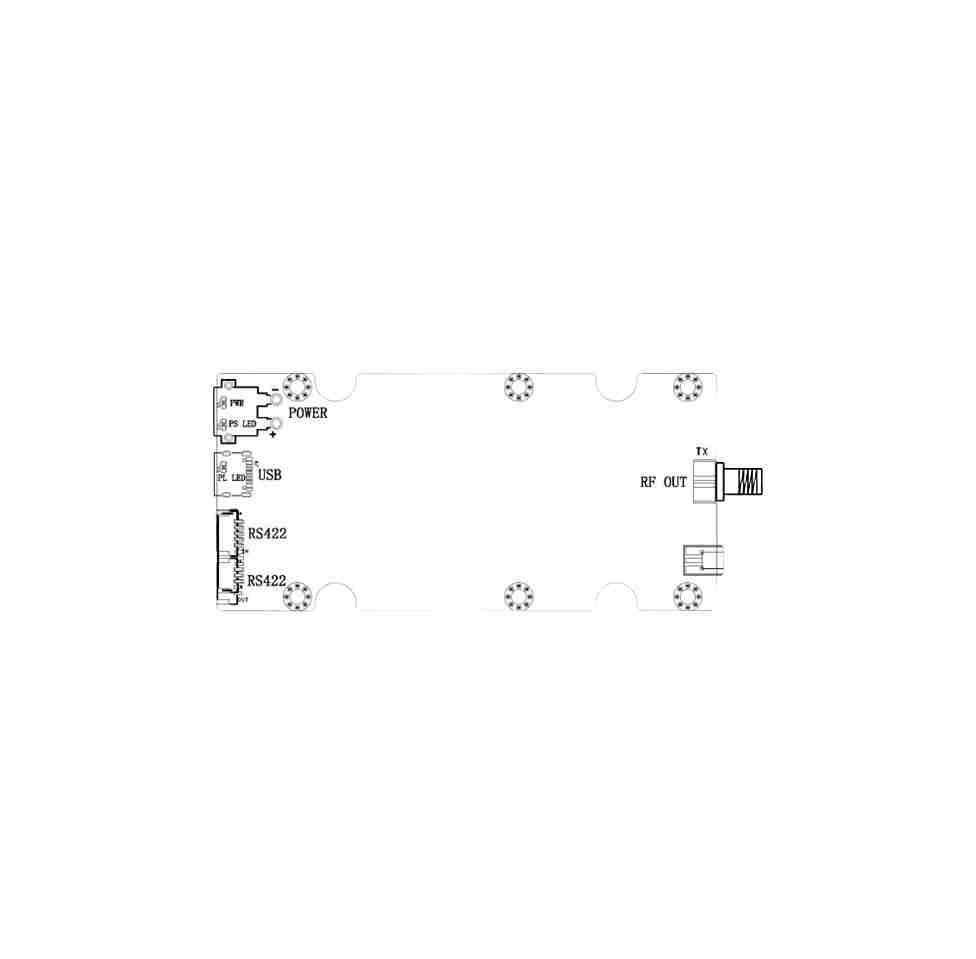
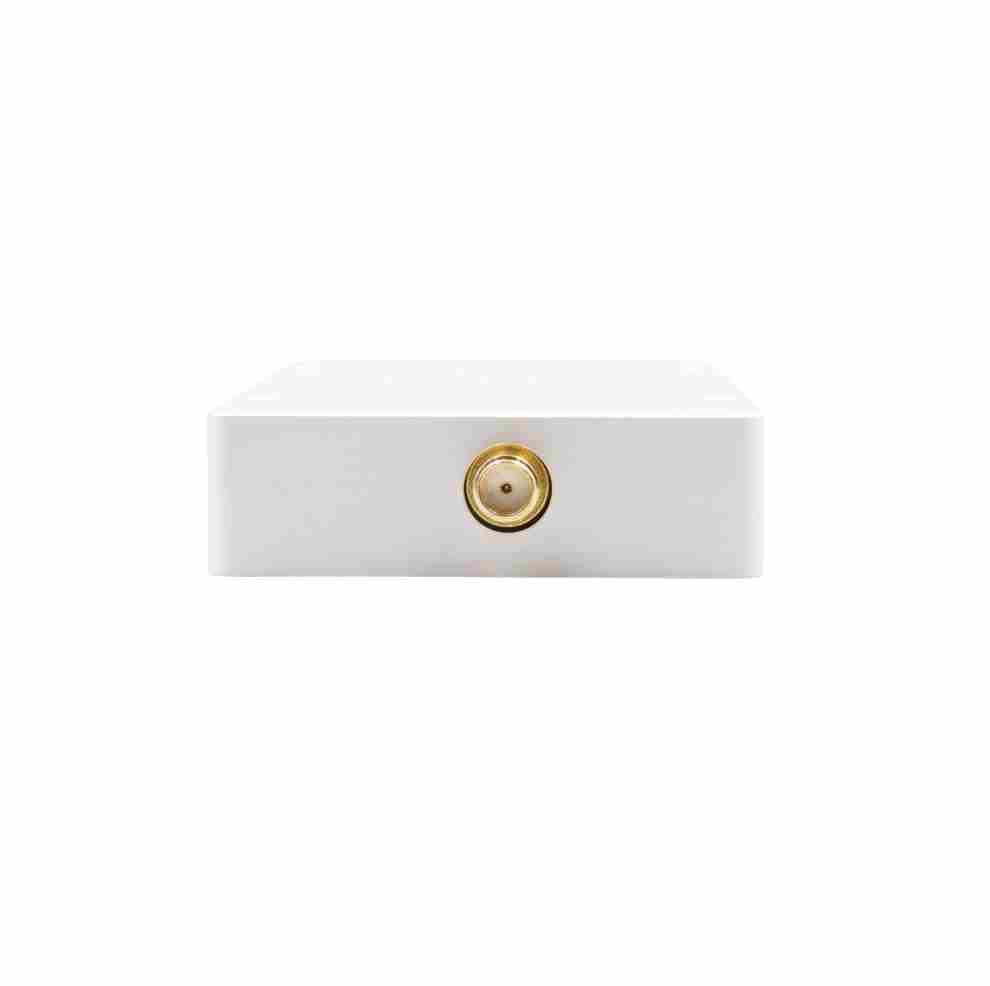
Built around an SDR architecture, the RFA300 supports different digital modulation modes and customizable waveforms. Its compact design, SMA RF output, RS422 communication interface, and configurable GPIO connections make it suitable for integration into specialized RF equipment and signal-processing platforms.
For engineering teams developing wideband RF systems, the RFA300 combines broad frequency coverage, flexible signal configuration, and compact integration in one module.
Wide Frequency Coverage: Supports an operating frequency range of 100MHz–6000MHz.
Up to 200MHz Real-Time Bandwidth: Provides flexible bandwidth configuration for different RF signal-generation requirements.
Software-Defined Radio Architecture: Supports configurable digital signal-generation modes.
Custom Waveform Support: Allows waveform customization for specialized engineering and testing requirements.
High Frequency Accuracy: Specified output frequency accuracy of less than 0.1MHz.
Adjustable Output: Provides up to 35 adjustment steps, with 0.5dB per step.
RS422 Communication: Supports external communication and equipment integration.
Configurable GPIO: Includes six configurable GPIO pins.
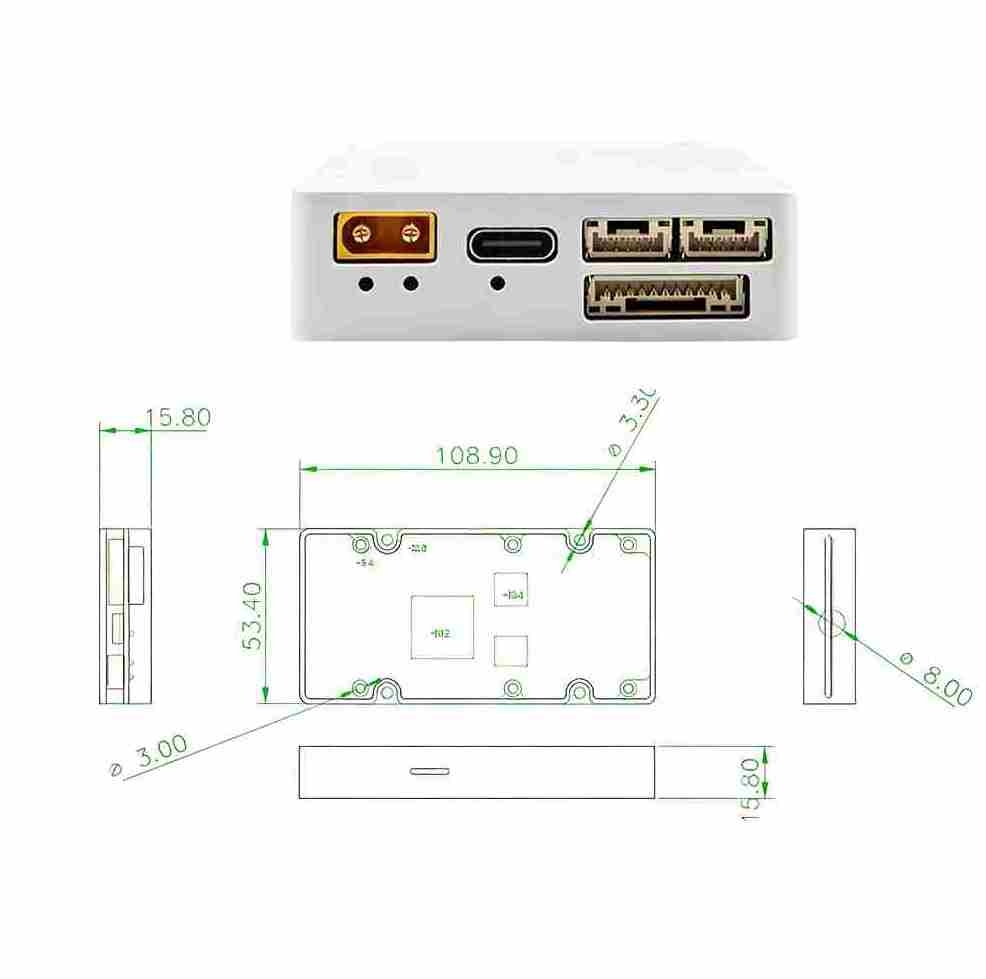
Compact Mechanical Design: Measures 105 × 50mm and weighs approximately 120g.
Frequency flexibility is an important consideration when selecting a signal generator for professional RF development.
The ANOEKO RFA300 covers a broad frequency range from 100MHz to 6000MHz, supporting signal-generation requirements across multiple RF bands.
This wide operating range gives equipment developers greater flexibility when designing RF test platforms, signal-processing equipment, and multi-band electronic systems.
Instead of relying on separate signal-generation modules for different frequency ranges, engineers can evaluate the RFA300 as a compact wideband signal-source component for compatible system architectures.
Bandwidth determines how much frequency spectrum a signal-generation platform can support at a given time.
The RFA300 provides a maximum real-time bandwidth of 200MHz, with adjustable bandwidth to accommodate different signal-generation configurations.
This capability is relevant to engineering applications involving wideband signal evaluation, modulation testing, RF receiver characterization, and laboratory signal-system development.
The actual usable bandwidth depends on the selected operating frequency, waveform configuration, and system operating conditions.
The RFA300 uses a software-defined radio architecture to support configurable digital signal generation.
Compared with a fixed-function signal source, an SDR-based platform offers greater flexibility in signal configuration and waveform development.
The module supports multiple digital modulation modes and customizable waveform generation, allowing engineers to adapt signal parameters to different test procedures and system requirements.
This makes the RFA300 a flexible RF signal-generation component for professional development environments where configurable signal characteristics are important.
Stable frequency generation and controllable output levels are important for repeatable RF testing.
The RFA300 specifies output frequency accuracy of less than 0.1MHz and power accuracy of ±0.5dB.
Its output adjustment system supports up to 35 steps, with an adjustment increment of 0.5dB per step.
These characteristics provide engineering teams with greater control when configuring signal levels for compatible RF test equipment and measurement systems.
Frequency range: 100MHz–6000MHz
Maximum real-time bandwidth: 200MHz
Output frequency accuracy: <0.1MHz
Output power accuracy: ±0.5dB
Output dynamic range: >25dB
Maximum CW output power: >5dBm, typical
Gain adjustment: Up to 35 steps
Adjustment increment: 0.5dB per step
Out-of-band rejection: <-45dBc
Phase noise: <-100dBc/Hz
Actual RF performance may vary with operating frequency, waveform, configuration, and measurement conditions.
A signal-generation module must provide practical electrical and communication interfaces to support integration into larger RF systems.
The RFA300 features an SMA RF output interface and an RS422 communication control interface.
It also incorporates six configurable GPIO pins, providing additional flexibility for external control and equipment-level integration.
These interfaces support the development of compact RF test platforms, programmable signal equipment, and specialized electronic systems.
Before integration, system developers should verify connector pin assignments, communication commands, GPIO electrical characteristics, and control-software compatibility with the applicable technical documentation.
The ANOEKO RFA300 is designed for equipment developers who need a compact signal-generation component.
With module dimensions of 105 × 50mm and a weight of approximately 120g ±5g, it can be incorporated into appropriately designed RF equipment and laboratory platforms.
The module operates over a specified temperature range of -25°C to +70°C.
Adequate heat dissipation is required during operation. Equipment designers should consider enclosure airflow, thermal conduction, installation clearance, and operating duty cycle when developing the complete system.
| Parameter | Specification |
|---|---|
| Product Model | RFA300 |
| Product Type | SDR Signal Generator Module |
| Frequency Range | 100MHz–6000MHz |
| Maximum Real-Time Bandwidth | 200MHz |
| Output Dynamic Range | >25dB |
| Maximum Output Power | >5dBm, CW mode, typical |
| Output Frequency Accuracy | <0.1MHz |
| Output Power Accuracy | ±0.5dB |
| Output Adjustment Steps | Up to 35 |
| Adjustment Increment | 0.5dB per step |
| Out-of-Band Rejection | <-45dBc |
| Phase Noise | <-100dBc/Hz |
| Custom Waveform | Supported |
| Digital Modulation | Multiple configurable modes |
| Operating Voltage | 12–32V DC |
| Maximum Operating Current | 0.27A at 30V DC |
| RF Output Interface | SMA |
| Communication Interface | RS422 |
| GPIO | 6 configurable pins |
| Operating Temperature | -25°C to +70°C |
| Dimensions | 105 × 50mm |
| Weight | 120g ±5g |
| Thermal Management | Adequate heat dissipation required |
Note: The figures above are based on the supplied product specifications. Detailed performance conditions, modulation options, control commands, and interface pin definitions should be confirmed with ANOEKO before system integration.
The ANOEKO RFA300 is designed for professional RF signal-generation and system-development applications.
Potential application areas include:
RF laboratory testing and development
Wideband signal-generation platforms
Digital modulation research
RF receiver and communication-system evaluation
Programmable RF test equipment
Electronic system development
Customized SDR-based equipment integration
Its broad frequency coverage, configurable bandwidth, and custom waveform support make it a flexible component for engineering teams developing specialized RF systems.
Applications involving RF transmission must comply with applicable spectrum regulations, licensing requirements, and local laws. Laboratory testing should be conducted using appropriate shielding, attenuation, and measurement equipment.
Different RF development projects may require different frequency configurations, waveform formats, control interfaces, bandwidth settings, and mechanical arrangements.
ANOEKO works with professional equipment developers and system integrators to discuss application-specific RF module requirements.
For RFA300 integration projects, customers can discuss:
Required frequency coverage
Real-time bandwidth requirements
Digital modulation options
Custom waveform requirements
Output power and adjustment configuration
RS422 communication compatibility
GPIO control requirements
Power-supply specifications
Thermal management and mechanical installation
Providing the intended operating frequency, bandwidth, signal format, and system interface requirements helps the engineering team evaluate product compatibility more efficiently.
Shenzhen ANOEKO Technology Co., Ltd. focuses on RF technology, signal-processing equipment, and low-altitude security-related products.
Its product portfolio includes RF signal modules, GaN RF power amplifier modules, RF detection equipment, and related components for professional system integration.
ANOEKO emphasizes application-oriented product development, technical communication, and customized RF solutions for equipment manufacturers and engineering partners.
Whether you are developing an RF laboratory platform, evaluating a wideband SDR signal source, or integrating a programmable RF module into specialized equipment, the RFA300 provides a compact hardware platform for further technical evaluation.
ANOEKO — RF Technology for Professional System Integration.
Consultation Hotline
+86 18948793112
Email:lisen1205@foxmail.com
Mobile:+86 18948793112
WhatsApp:+86 18948793112
Address:Changchun North Road, Gongming Street, Guangming District, Shenzhen, China
Copyright © Copyright © 2024 Anoeko Technology Co., Ltd. All Rights Reserved. | Anti-Drone & Low-Altitude Defense Experts ICP:粤ICP备13053733号-1