Contact Us
|
WeChat
WeChat ID:842122368Scan to Connect
WeChat ID:842122368Scan to Connect

Electronic Warfare Tactics: New Counter-Drone Strategies Reshaping Modern Battlefields
How Ukraine’s Deployment of Advanced Electronic Warfare Systems and ANOEKO’s Innovations Are Defeating UAV Threats
The modern battlefield is evolving at an unprecedented pace. Low-cost, highly effective unmanned aerial vehicles (UAVs) have become a persistent threat, capable of conducting reconnaissance, precision strikes, and even swarm attacks. Traditional air defense systems often struggle against these small, agile drones due to their low radar cross-section and the sheer volume of targets. In response, nations are rapidly investing in electronic warfare (EW) technologies. Ukraine’s recent deployment of next-generation EW systems to counter Russian drones marks a significant leap forward in battlefield defense. This article explores how electronic warfare tactics are reshaping counter-drone operations and highlights the role of emerging solutions, including those from ANOEKO, a brand at the forefront of this domain.
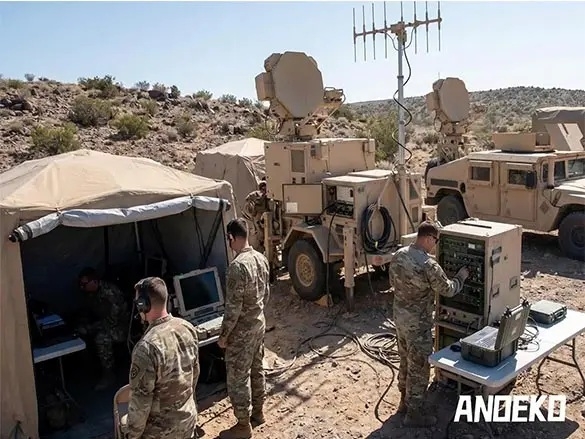
How Electronic Warfare Systems Neutralize Drones
Electronic warfare counters drones by targeting their most vulnerable components: the radio links, navigation receivers, and data feeds. Instead of kinetic interception, EW systems use electromagnetic energy to disrupt, deceive, or disable hostile UAVs. The core mechanisms include:
Signal Jamming – Powerful jammers transmit high-energy signals on the same frequencies used by drone controllers and video downlinks. This overwhelms the command link, forcing the drone into a fail-safe mode such as return-to-home, hovering, or crash-landing. Modern systems often employ adaptive jamming techniques to counter frequency-hopping drones.
GPS Spoofing – By broadcasting fake GPS coordinates, an EW system can trick a drone’s navigation receiver into believing it is somewhere else. This deception can redirect the UAV away from sensitive areas, cause it to circle endlessly, or even initiate a controlled landing. Sophisticated spoofers can seamlessly take over the drone’s geolocation without triggering onboard alarms.
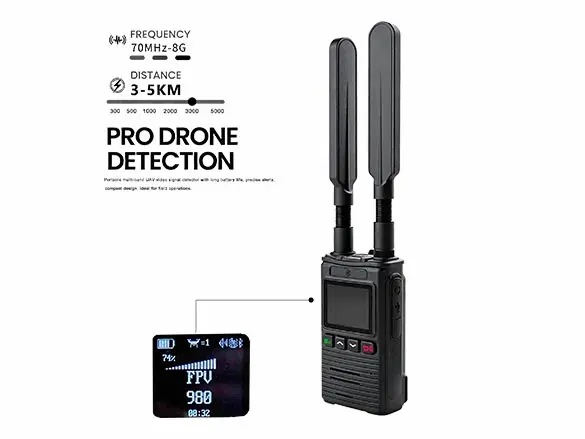
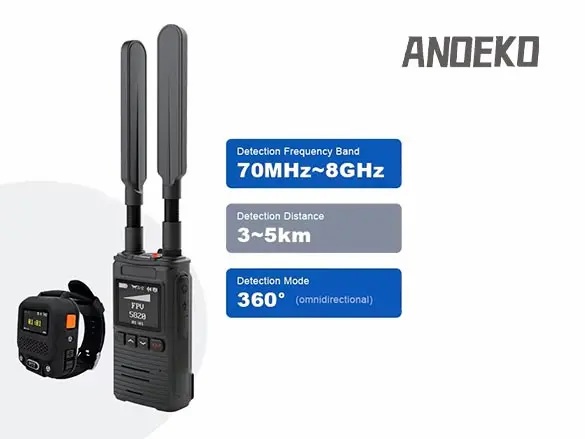
Detection and Identification – Before jamming or spoofing, defenders must first detect the threat. A robust **Drone Detection System** passively scans the radio spectrum for control and telemetry signals. Advanced systems can classify UAV models, track their flight paths, and differentiate between friendly and hostile platforms. This intelligence enables timely and precise countermeasures.
The integration of these technologies dramatically improves ground forces’ survivability against aerial threats. For example, a Portable Drone Detector carried by infantry can provide early warning of approaching FPV (first-person view) attack drones, while a fixed-site Anti-UAV Module emits targeted jamming to protect a forward operating base.
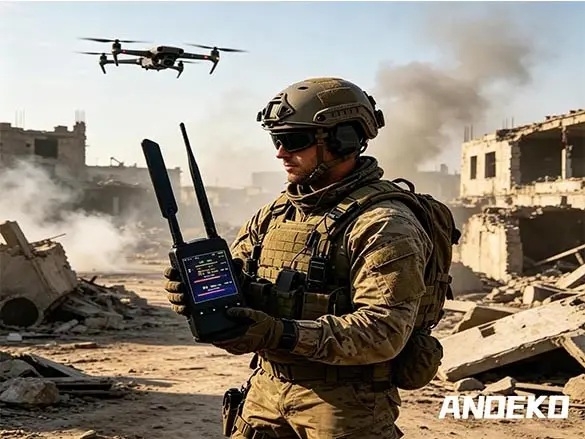
Emerging Technologies: The ANOEKO Advantage
As drones become more resilient—employing frequency hopping, encrypted links, and inertial navigation—electronic warfare must evolve. Enter **ANOEKO**, a brand specializing in next-generation counter-UAV solutions. Their latest product line includes a compact Anti FPV Device specifically designed to defeat the low-latency video links used by racing and FPV attack drones, which have caused heavy losses in recent conflicts.
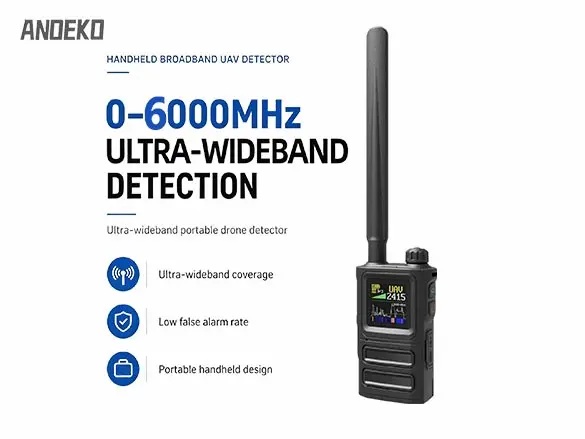
What sets ANOEKO apart is the development of a New anti-drone module that combines AI-driven signal analysis with multi-band jamming. This module automatically identifies unfamiliar drone protocols and adapts its jamming waveform in milliseconds. Additionally, ANOEKO offers a Portable Drone Detector that fits in a backpack, providing dismounted troops with real-time threat alerts without broadcasting telltale emissions.
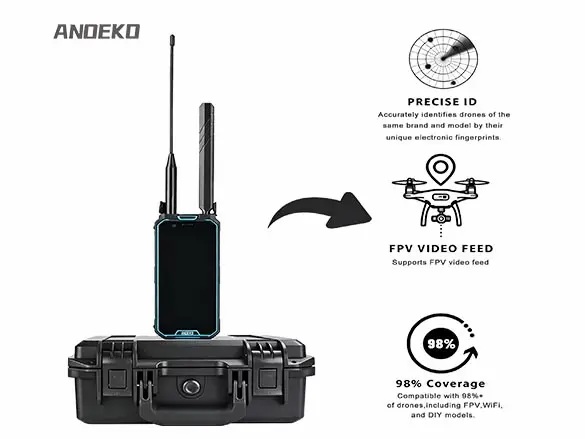
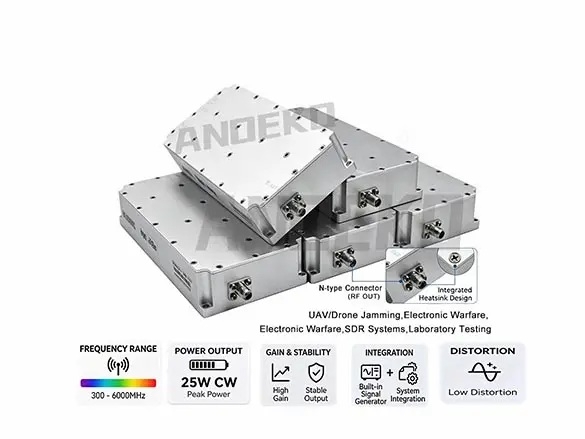
Another key innovation is the Anti Drone Module that integrates both detection and suppression into a single, low-power unit. This module can be mounted on vehicles, static posts, or even tethered balloons, creating a layered defense perimeter. The modular design allows users to scale from individual soldier protection to full-area denial.
Future Trends and Persistent Challenges
The race between drone offensive and electronic defense is accelerating. Several trends will shape the next five years:
● AI and Machine Learning Integration – AI will enable EW systems to predict drone behavior, prioritize threats, and automatically deploy the most effective countermeasures. This reduces operator workload and cuts reaction times from minutes to microseconds.
● Multi-Spectral Fusion – Future systems will not rely solely on radio frequency jamming. They will integrate electro-optical, infrared, and acoustic sensors to detect drones that emit no radio signals (e.g., autonomous, pre-programmed UAVs). Multi-spectral countermeasures could include directional microwaves or laser blinding.
● Miniaturization and Modularity – Smaller, lower-cost components will allow every infantry squad to carry a Portable Drone Detector and a lightweight jammer. Drones themselves will carry EW payloads to protect friendly forces or attack enemy UAVs in mid-air.
However, challenges remain. Drone manufacturers are embedding anti-jam GPS receivers and autonomous navigation that no longer relies on continuous radio links. Moreover, the proliferation of civilian drones modified for combat means EW systems must distinguish between harmless and hostile targets to avoid collateral disruption. The technological competition is thus endless—a new countermeasure soon meets a counter-countermeasure.
Conclusion
Electronic warfare has moved from a supporting role to center stage in modern conflict. The deployment of advanced EW systems by Ukraine demonstrates that effective counter-drone operations can turn the tide on the battlefield, protecting critical infrastructure and saving lives. As threats evolve, so must the defenders. Innovations from companies like ANOEKO—including their new anti-drone module, anti-FPV device, and portable detectors—offer a glimpse into a future where electronic warfare provides a resilient, scalable, and non-kinetic shield against the rising drone menace. For any force seeking to dominate the electromagnetic spectrum, investing in cutting-edge electronic warfare is no longer optional—it is imperative.
Consultation Hotline
+86 18948793112
Email:lisen1205@foxmail.com
Mobile:+86 18948793112
WhatsApp:+86 18948793112
Address:Changchun North Road, Gongming Street, Guangming District, Shenzhen, China
Copyright © 2002-2026 Anoeko Technology Co., Ltd. All Rights Reserved. | Anti-Drone & Low-Altitude Defense Experts ICP:ICP