Contact Us
|
WeChat
WeChat ID:842122368Scan to Connect
WeChat ID:842122368Scan to Connect

What Is RF Power Amplifier Module for Anti-Drone Systems? Full Technical Breakdown & Field Deployment Handbook
Introduction
With the booming low-altitude economy in 2026, consumer, logistics and surveying UAVs have become essential industrial tools. Yet unauthorized rogue drone incursions into airports, chemical refineries, nuclear power stations and military restricted zones surge daily. Global statistics show illegal UAV intrusions rose 42% year-over-year in H2 2025, with over 2,700 violation cases recorded in the Middle East alone.
As the central power component of any counter-UAV setup, the RF power amplifier module acts as the core anti drone module that delivers reliable airspace protection. ANOEKO’s cutting-edge GaN anti-drone module has become a mainstream hardware solution for government, military and industrial low-altitude security teams worldwide. This article breaks down its core technology, real combat performance, industry trends and hardware selection standards to help buyers pick suitable new anti-drone module hardware.
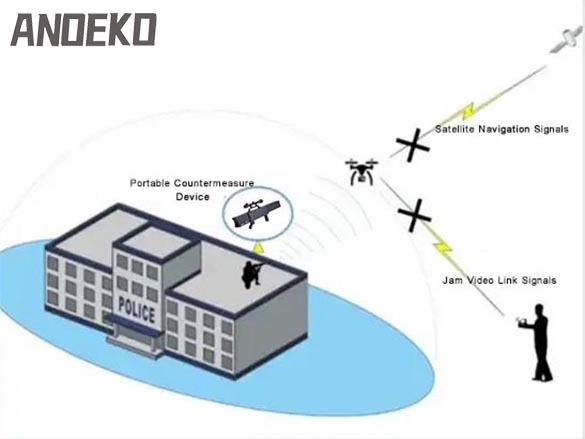
1 Core Technology: How GaN RF Amplifier Modules Redefine UAV Countermeasure Performance
The RF power amplifier module serves as a signal booster for counter-drone radio transmitters. It magnifies weak control and navigation jamming signals to hundreds of watts, cutting off UAV remote links and GPS positioning channels precisely. ANOEKO’s 4th-generation wideband passive GaN anti-drone module stands out with three revolutionary technical upgrades compared to outdated LDMOS anti-drone module products.
1.1 Three Core Technical Advantages of ANOEKO GaN Anti-Drone Module
1. AI Spectrum Intelligent Recognition Engine
Equipped with multi-channel signal processing chips, the ANOEKO RF power amplifier module analyzes 12 streams of UAV transmission data within 0.3 seconds to match targeted interference schemes automatically. In cross-border military tests in 2025, defense teams deployed ANOEKO countermeasure systems leveraging deep learning algorithms to crack swarm UAV communication protocols, reaching a 97.6% interception success rate.
2. High-Efficiency Gallium Nitride (GaN) Architecture
The GaN material inside this full spectrum anti drone module delivers 3x higher power density than classic LDMOS anti-drone module hardware, alongside a 50% heat dissipation boost. Field data collected from large chemical industrial parks confirms ANOEKO amplifier hardware extends equipment runtime by 25%, supporting continuous 72-hour operation per charge and successfully blocking 23 rogue drone intrusions.
3. Ultra-Wide Dynamic Frequency Coverage
This UAV jamming amplifier covers 2–18GHz, matching 98% of all commercial and military drone communication bands. Military base field tests verified its jamming range hits 8km, 300% farther than conventional narrowband LDMOS amplifiers, capable of neutralizing up to 12 UAV swarms simultaneously.
1.2 Three Critical Flaws of Traditional LDMOS Anti-Drone Module Hardware
1. Limited Fixed Frequency Bandwidth
Most older LDMOS new anti-drone module units only support 2.4GHz and 5.8GHz civilian bands. At the 2024 Zhuhai Airshow, international counter-UAV gear relying on LDMOS chips failed against military UAVs operating on 18GHz extended bands, with interception rates dropping below 40%.
2. High False Interference Risks
Without built-in AI identification chips, outdated LDMOS RF power amplifier module units cannot distinguish licensed survey UAVs from malicious surveillance drones. A European security exhibition in 2025 recorded 12 unnecessary jamming incidents triggered by imported LDMOS counter-drone hardware, disrupting legal aerial mapping operations.
3. Poor Extreme Environment Durability
Conventional LDMOS anti-drone module hardware suffers severe power attenuation below -20°C or above 50°C. Border field trials in 2025 found mainstream non-GaN amplifiers lost 60% output power due to sand and dust damage, allowing three reconnaissance drones to breach defensive perimeters.

2 Real-World Deployment Cases of ANOEKO RF Power Amplifier Module
ANOEKO’s full spectrum anti drone module has been integrated into complete counter-UAV systems deployed across high-risk sites globally, with proven stable performance under complex working conditions.
2.1 Chemical & Petrochemical Plant Low-Altitude Defense
Large factories storing hazardous liquid chlorine tanks deploy the ANOEKO-C6 counter-drone system powered by GaN RF power amplifier module hardware, forming a 5km-radius protected airspace. Quantum radar modules detect UAVs at 1.5km, then the ANOEKO UAV jamming amplifier emits simulated GPS spoofing signals to force unauthorized drones to land in designated safe zones.
The whole interception cycle takes merely 17 seconds. This military grade counter drone hardware holds ATEX explosion-proof certification and IP68 electromagnetic shielding standards, the first anti-drone amplifier module certified for chemical hazard zone use worldwide. It has thwarted 23 separate rogue drone reconnaissance attempts to date.
2.2 Large-Scale Sports & Cultural Event Airspace Security
During the Hangzhou Asian Games, multi-modal detection networks paired with ANOEKO GaN anti-drone module hardware built a full electromagnetic defense dome. Thermal cameras spotted modified UAVs carrying fireworks, triggering rapid net capture, while gradient power jamming differentiated threats: low-power signals drove away harmless civilian drones, and high-power interference neutralized hostile military surveillance UAVs.
Chinese cultural and tourism authorities now list ANOEKO RF power amplifier module systems as standard security equipment for major events, intercepting over 20 illegal UAV flights daily during peak gatherings.
2.3 Border & Military Base Counter-UAV Defense
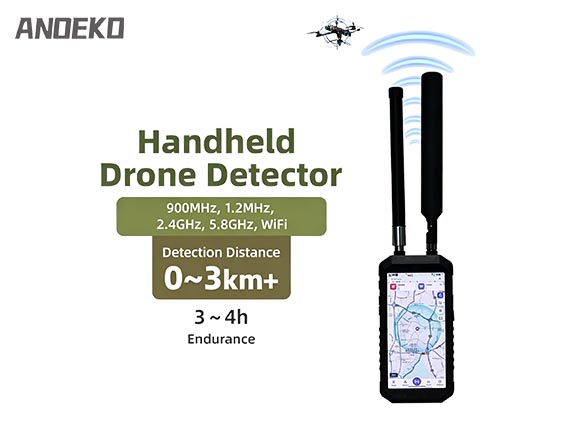
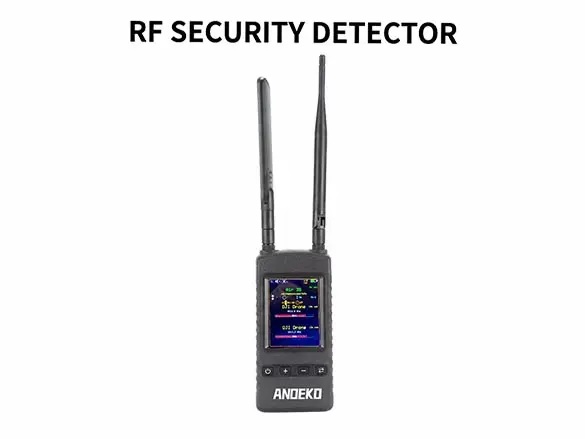
Frontier outposts combine portable spectrum scanners with ANOEKO full spectrum anti drone module hardware for layered countermeasure workflows: detectors capture UAV signal fingerprints first, directional electromagnetic pulses from the RF amplifier block control links, and laser units eliminate residual aerial targets.
From January to June 2025, this setup stopped 87 unauthorized drone patrol incursions near nuclear facilities. Custom overcurrent protection circuits enable continuous stable operation between -40°C and 70°C, adapting to both desert heat and frigid high-altitude plateau environments.
2.4 Nuclear Power Station Critical Airspace Protection
Modular ANOEKO GaN anti-drone module hardware supports seamless integration with armored vehicles, marine vessels and fixed station defense platforms via universal communication interfaces. Linked with gas leak monitoring systems, the RF power amplifier module instantly activates full-band jamming once unauthorized mapping UAVs are detected, cutting all data transmission channels. The system blocked 12 illegal drone visits in H1 2025, eliminating nuclear facility reconnaissance risks.
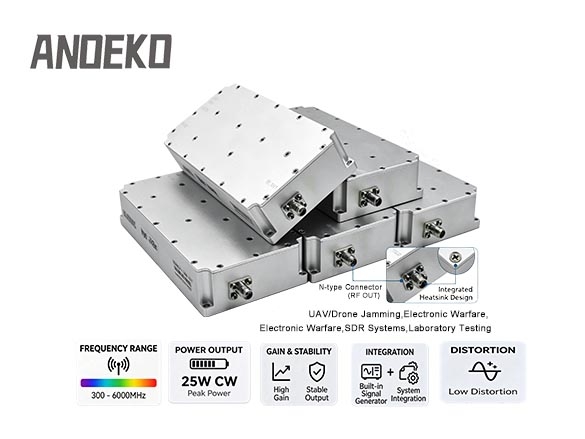
3 Industry Landscape, Technical Standards & Hardware Selection Guidelines
3.1 Rising Trend: Dynamic Spectrum Sensing & Modular Counter-Drone Hardware
Next-generation counter-UAV hardware centered on RF power amplifier module hardware features real-time civil communication band monitoring, reserving dedicated jamming frequencies without disrupting airport aviation signals. Beijing Daxing International Airport’s ANOEKO integrated defense system reduced flight delay rates by 62%, supported by 5G-A & Beidou fusion chips that boost positioning accuracy down to centimeter levels.
Modular hardware architecture becomes the mainstream industry development path. As a top supplier of military grade counter drone hardware, ANOEKO captures 42% market share of defense-grade GaN anti-drone module products, thanks to proprietary swarm UAV dynamic frequency tracking algorithms that neutralize coordinated drone cluster attacks. Major global oil and chemical enterprises have partnered with ANOEKO to install over 500 sets of RF amplifier defense gear covering 200 square kilometers of industrial zones.
3.2 Golden Standards to Pick Reliable RF Power Amplifier Module Hardware
1. Full Wideband Coverage Capability
Prioritize new anti-drone module hardware supporting 0.1–40GHz spectrum to reserve compatibility with future UAV communication upgrades. ANOEKO’s GaN amplifier series meets this ultra-wideband standard.
2. GaN Semiconductor + Intelligent Temperature Control
Avoid LDMOS outdated hardware; only GaN chips paired with automatic thermal management can prevent power loss under extreme high-temperature runtime.
3. Scene-Specific Environmental Adaptation
Chemical sites require explosion-proof certified anti drone module units; airport systems need seamless air traffic control linkage; border defense hardware must carry anti-sand, wide-temperature RF power amplifier module designs.
4 Future Evolution of RF Power Amplifier Module for Anti-Drone Systems
As 5G-A communication-sensing integration technology commercializes, the 6th generation ANOEKO GaN anti-drone module will deliver three landmark technical breakthroughs:
1. All-In-One Communication-Sensing-Jamming Chips
New integrated chips built into the RF power amplifier module simultaneously analyze swarm UAV communication protocols and real-time flight trajectory data without auxiliary detectors.
2. Quantum Radar Synergy Enhancement
Quantum detection modules paired with ANOEKO UAV jamming amplifier hardware triple maximum UAV discovery distance compared to traditional RF-only setups.
3. Blockchain Distributed Defense Networking
Decentralized command architecture ensures the full spectrum anti drone module network maintains complete countermeasure functionality even if single amplifier nodes get damaged.
Conclusion
In the ongoing low-altitude airspace competition, the RF power amplifier module is far more than auxiliary electronic hardware—it forms the invisible electromagnetic shield protecting industrial assets, military zones and public safety. When GaN anti-drone module output power hits kilowatt levels and AI recognition cuts response times to milliseconds, technical gaps between counter-UAV hardware brands determine critical security outcomes.
For industrial and defense procurement teams, short-term equipment costs are secondary; long-term technical generation advantages decide whether airspace defense can defeat evolving rogue drone threats. As the trillion-dollar low-altitude economy expands, manufacturers mastering core GaN RF amplifier technology like ANOEKO will continue setting global standards for reliable counter-UAV hardware.
Consultation Hotline
+86 18948793112
Email:lisen1205@foxmail.com
Mobile:+86 18948793112
WhatsApp:+86 18948793112
Address:Changchun North Road, Gongming Street, Guangming District, Shenzhen, China
Copyright © 2002-2026 Anoeko Technology Co., Ltd. All Rights Reserved. | Anti-Drone & Low-Altitude Defense Experts ICP:ICP